
PROJECTS, 3DPRINTING4 MIN
Water Rocket – Neptune 1
Water Rocket – Neptune 1
Status: under construction. The rocket, flight controller and launch base are built; the first test flight is still ahead.
Neptune 1 is a water rocket made from a 1.5 l PET bottle and 3D-printed parts. A small flight controller in the nose detects the highest point of the flight and opens the parachute on its own.
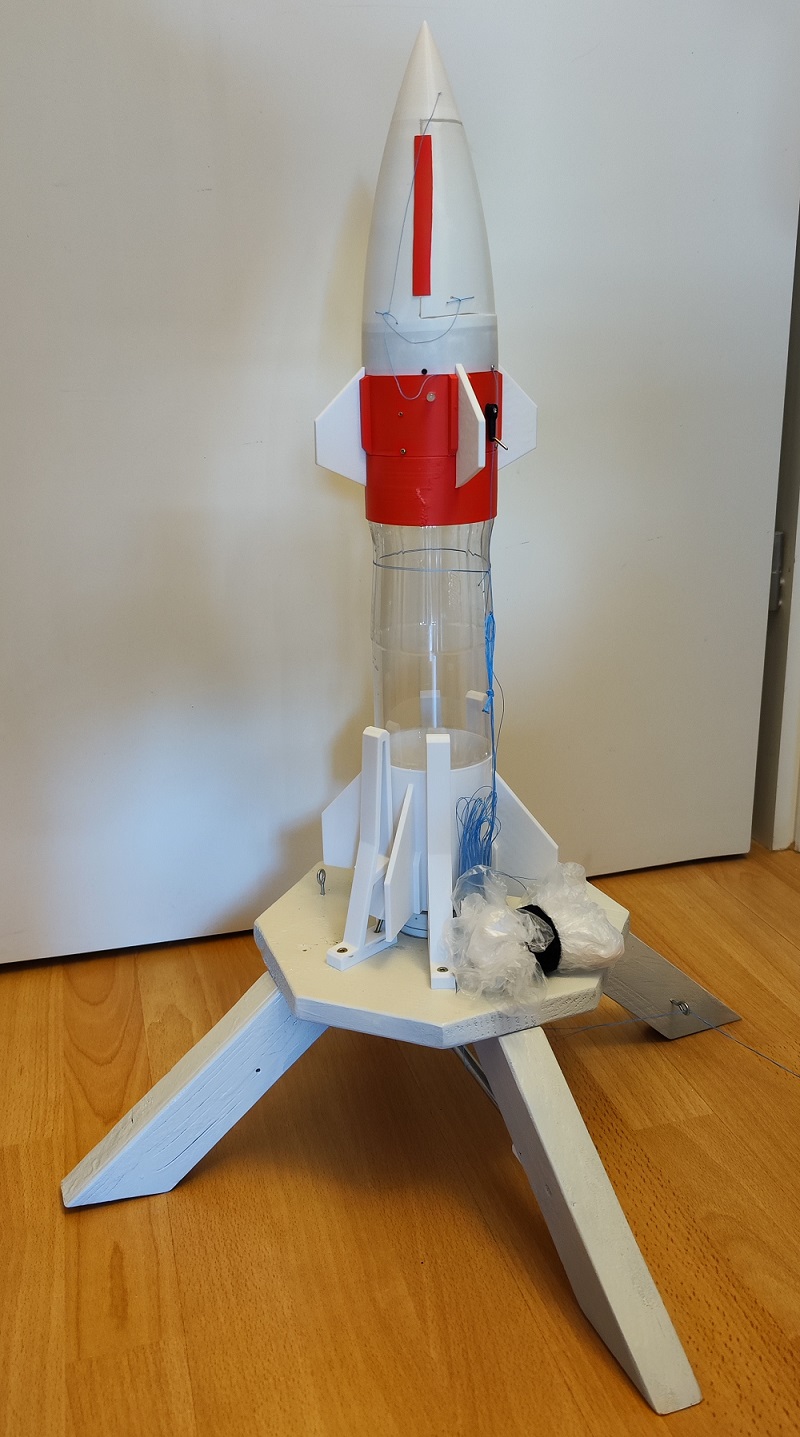
Overview
- Body: 1.5 l hard PET bottle, 3D-printed nose cone, 4 large and 4 small fins, flight controller case
- Weight: 336 g empty, including flight controller and 18650 battery
- Propulsion: water and compressed air, pumped in through a bicycle valve
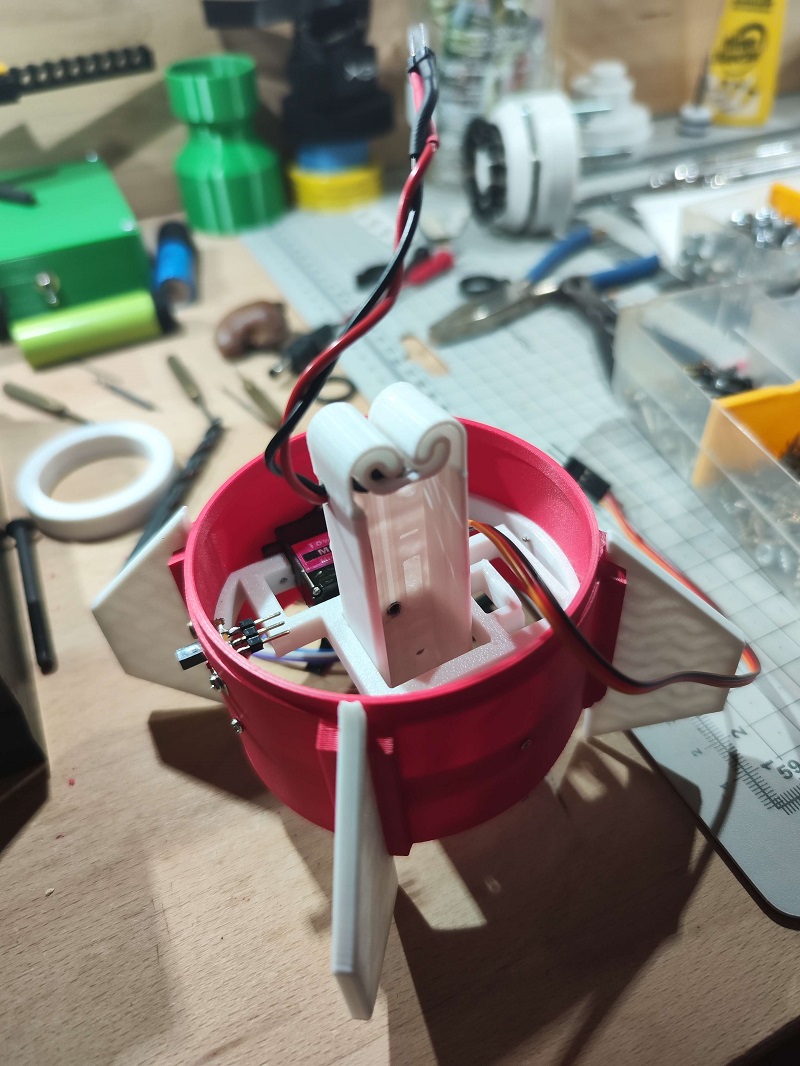
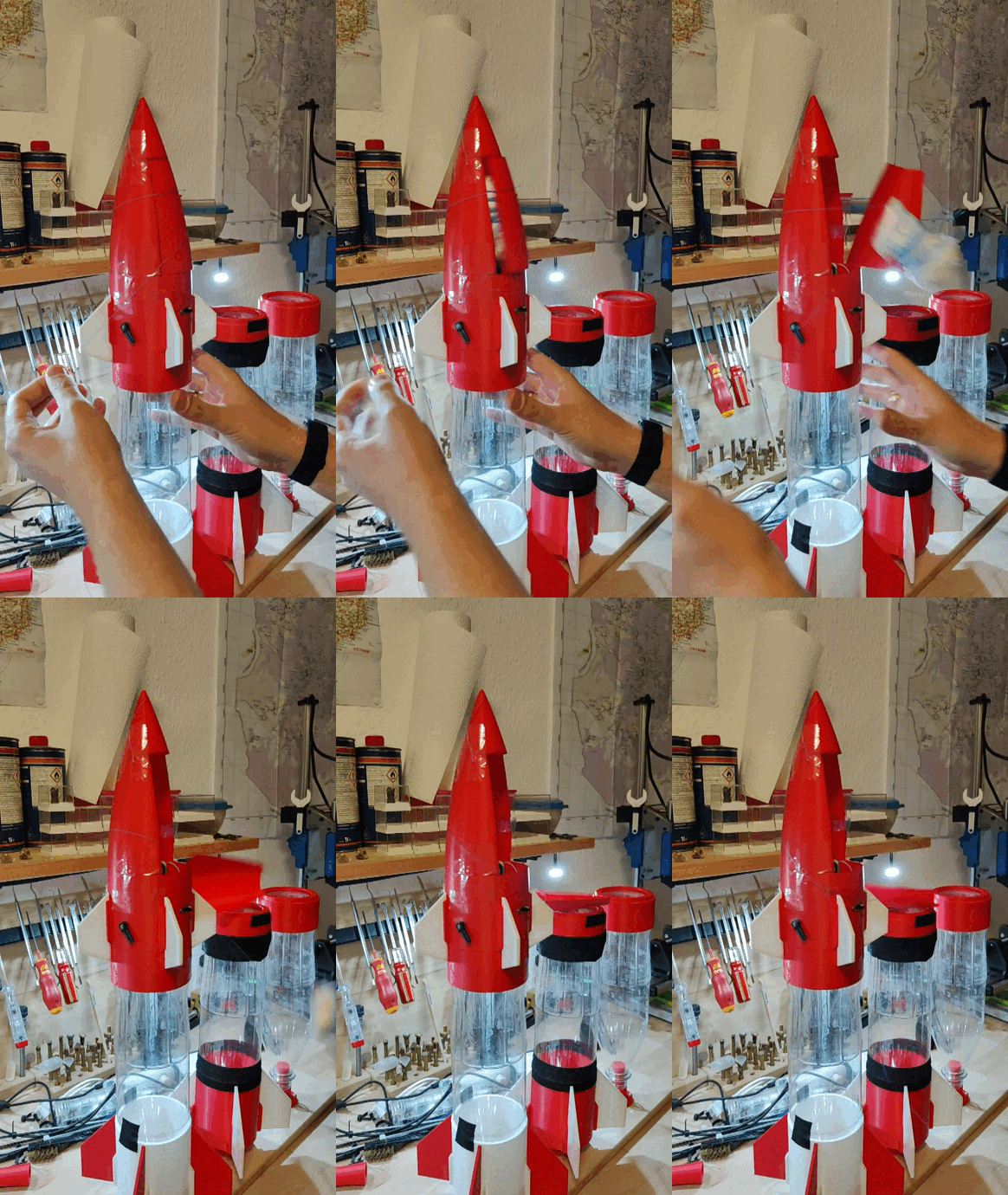
- Recovery: spring-loaded parachute, released by a servo at apogee
Flight Controller
| Component | Purpose |
|---|---|
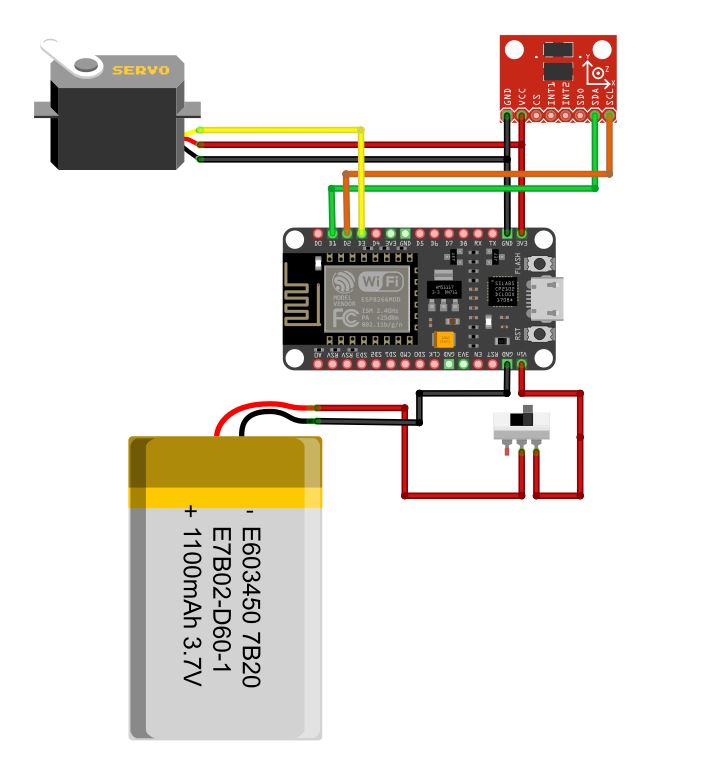
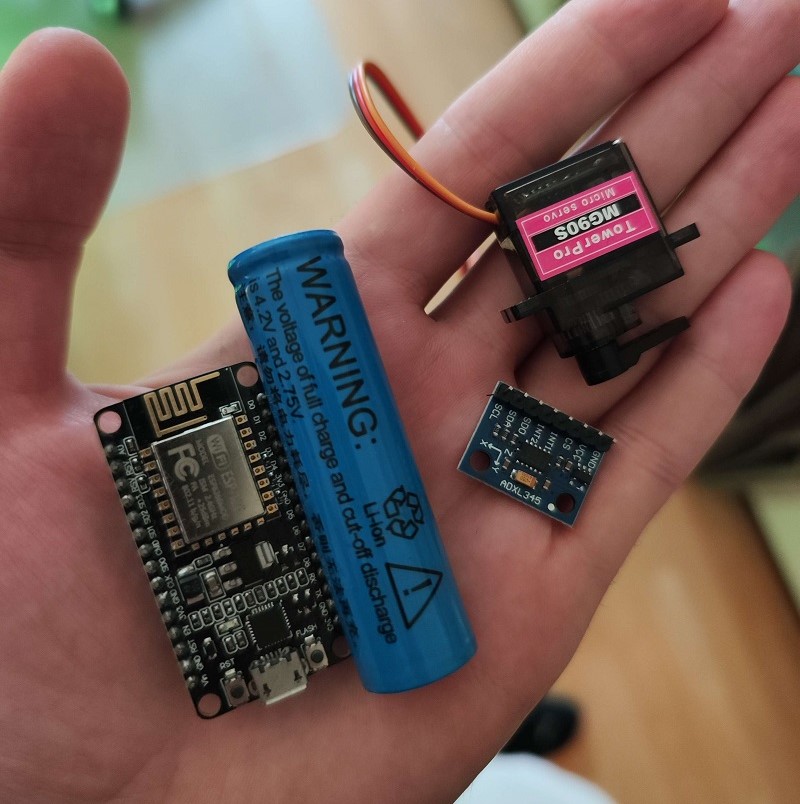
| NodeMCU (ESP8266) | Main microcontroller, runs MicroPython |
| ADXL345 | 3-axis accelerometer on I2C, detects 0 G at apogee |
| Servo | Opens the parachute door |
| WS2812 NeoPixel | Status LED |
| 18650 Li-Ion cell | Power supply |
| Switch | Power on/off |
Pins: NeoPixel on GPIO 13, servo PWM on GPIO 14, buzzer on GPIO 12, I2C SDA/SCL on GPIO 4/5.
Software
The firmware is written in MicroPython with uasyncio. It runs three tasks:
- sensordata() logs the X/Y/Z acceleration with a timestamp to
sensor.txt. - buzzer() beeps when apogee is detected.
- servo() opens the parachute when apogee is detected.
At apogee the rocket is weightless for a moment, so the Z axis of the ADXL345 drops to about 0. When abs(z_value) < 10, the buzzer beeps for 0.5 s and the servo turns from 30 to 122 (PWM duty) to release the parachute.
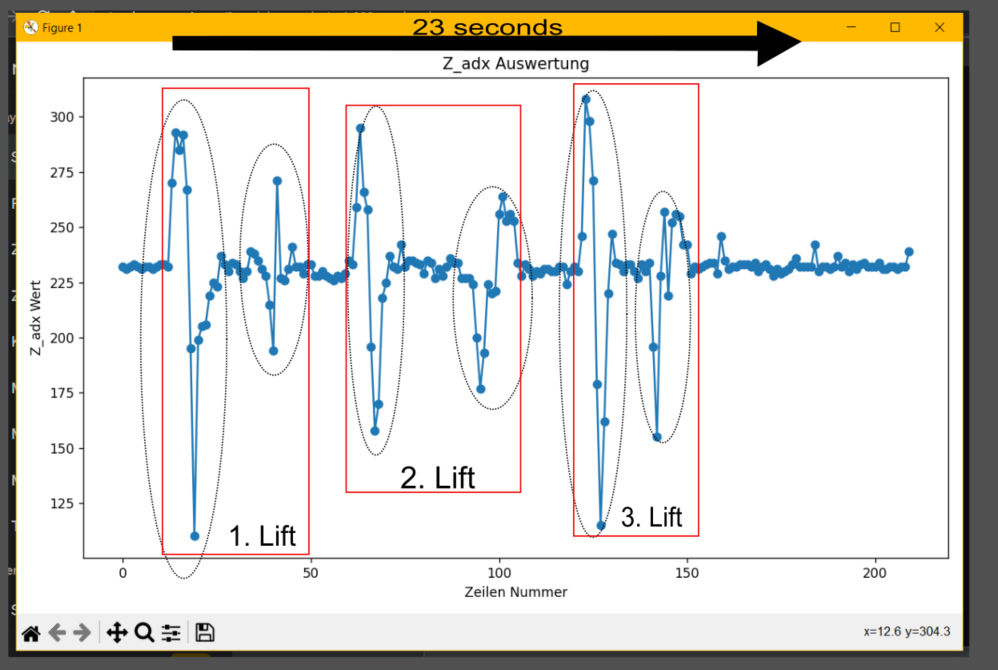
Upload and REPL with mpremote:
python -m mpremote connect COM_PORT cp main.py :
python -m mpremote connect COM_PORT
Launch Base and Trigger
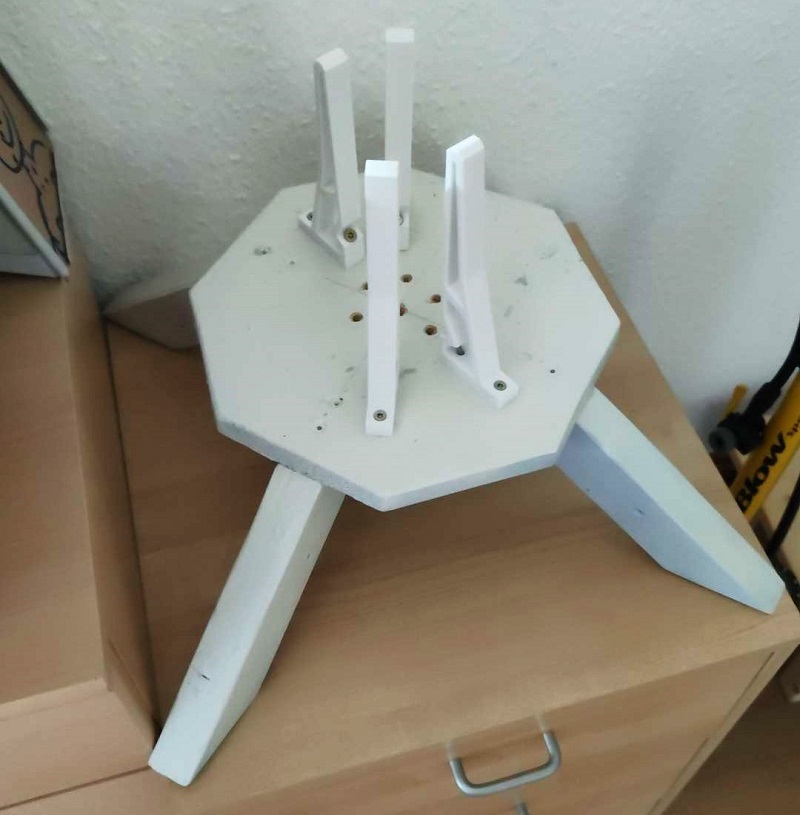
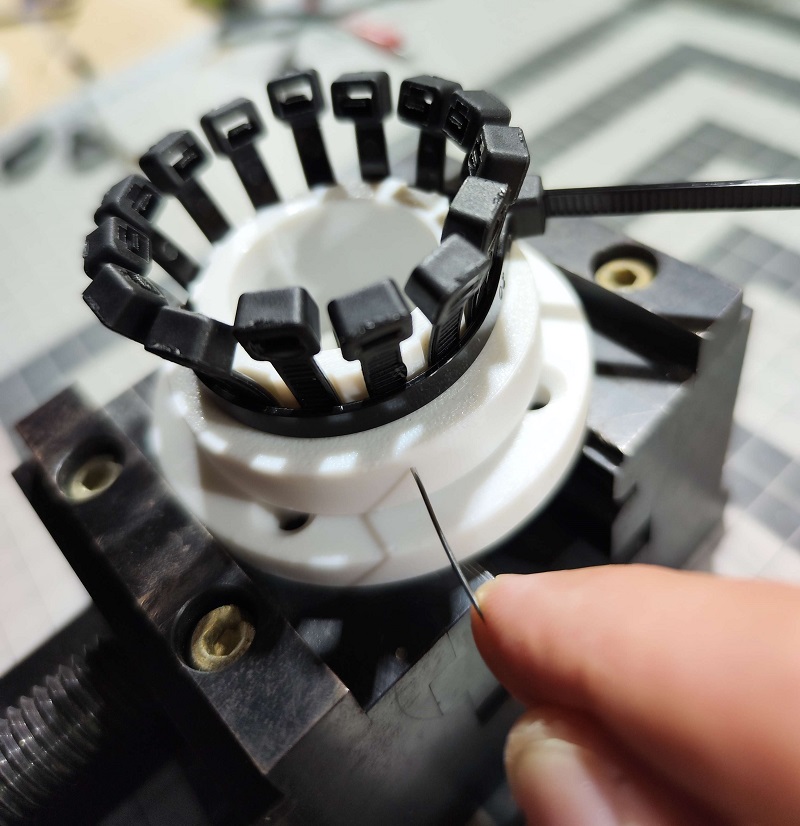
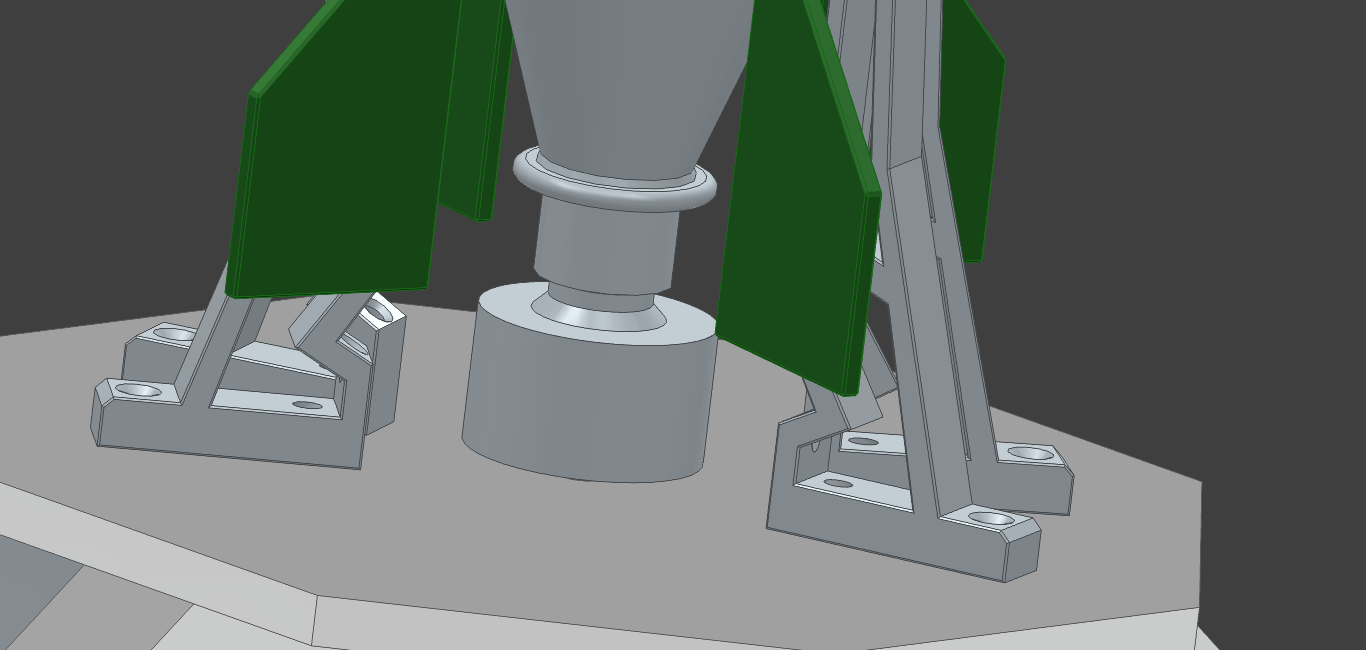
The launch base combines a wooden platform with 3D-printed legs, a trigger ring and a valve adapter. Cable ties hold the bottle while it is pumped up. Pulling the trigger ring releases the cable ties, and the rocket launches. The launch needs no electronics.
Parachute
The parachute is made from thin plastic film and is attached to the nose cone. A piece of PET bottle acts as a spring. When the servo opens the door, the spring pushes the parachute out. Pack the parachute loosely, so it does not tangle and opens fully.
Next Steps
- Refine the parachute door and trigger
- Optimize the flight controller software
- Revise the air tube, valve and nozzle
- Publish the CAD files
- First test flight